
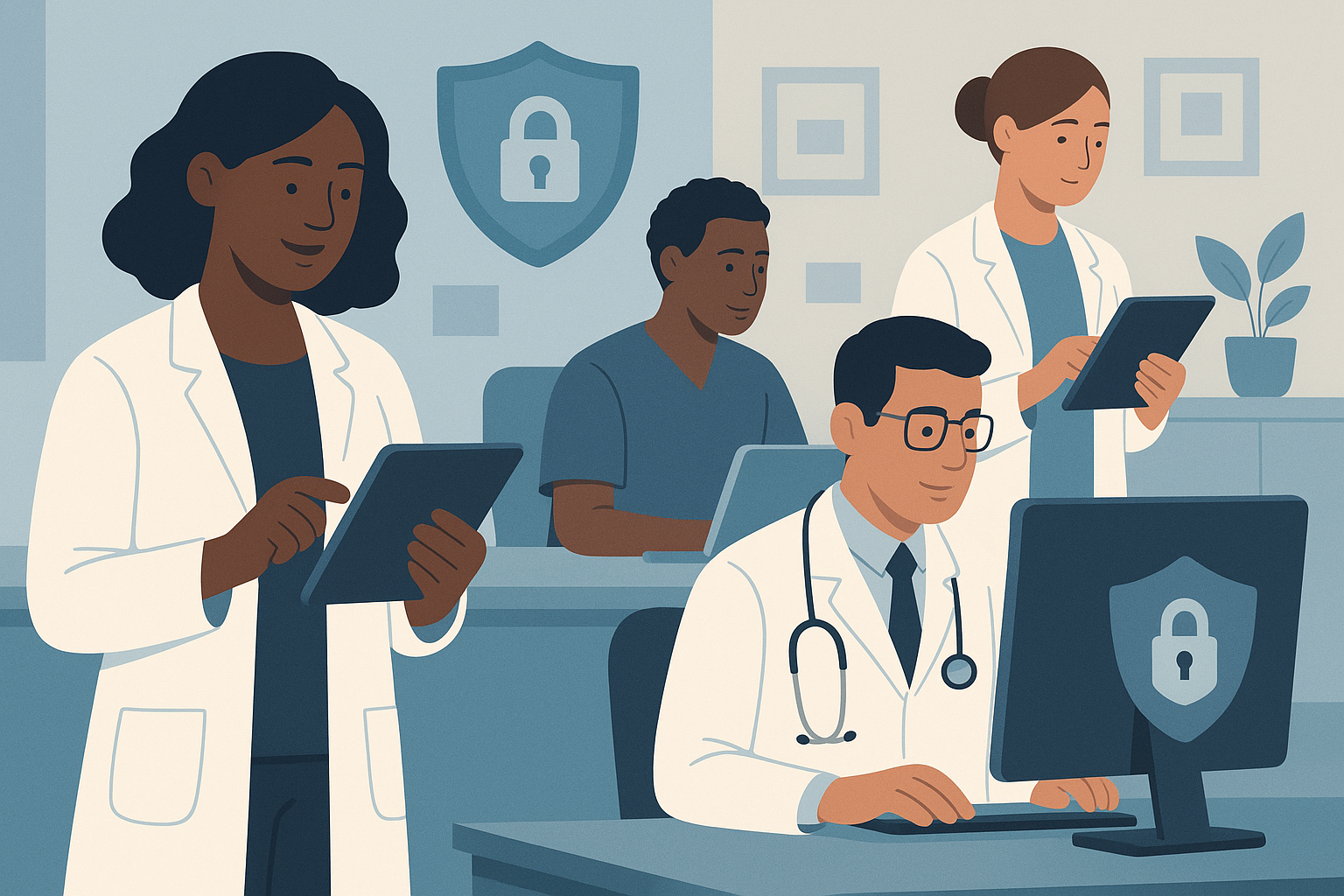
Healthcare Data Breach Prevention: A South Florida Practice Guide
Healthcare data breaches aren't just headlines anymore—they're a constant threat facing medical practices across South Florida. From Miami to West Palm Beach, healthcare providers handle Protected Health Information (PHI) every single day, making them prime targets for cybercriminals. The average cost of a healthcare data breach now exceeds $10 million, and practices that experience one face not just financial losses but damaged reputations, regulatory penalties, and potential lawsuits. Healthcare data breach prevention isn't optional; it's essential for survival in today's digital landscape.
If you're running a medical practice, dental office, mental health clinic, or any healthcare facility in South Florida, understanding how to prevent data breaches while maintaining HIPAA compliance can feel overwhelming. The good news? With the right approach and expert guidance, you can protect your patients' information without breaking the bank or disrupting your daily operations.
Understanding the Real Threat Landscape for South Florida Healthcare
South Florida medical practices face unique cybersecurity challenges. The region's concentration of healthcare facilities, from small private practices to specialty clinics, makes it an attractive target for organized cybercriminal groups. These attackers know healthcare providers often operate on tight margins and may lack dedicated IT security teams, making them vulnerable.
The threats come in many forms. Ransomware attacks can lock you out of your entire electronic health record (EHR) system until you pay thousands or even hundreds of thousands in ransom. Phishing emails trick staff into revealing login credentials or downloading malware. Insider threats—whether malicious employees or simply careless ones—account for a significant portion of breaches. Even lost or stolen devices containing unencrypted patient data constitute reportable breaches under HIPAA.
What makes healthcare data particularly valuable to criminals? Medical records contain everything needed for identity theft: Social Security numbers, insurance information, billing details, and complete medical histories. Unlike credit card numbers that can be quickly canceled, this information remains valuable for years, selling for premium prices on dark web marketplaces.
Essential Healthcare Data Breach Prevention Strategies
Effective healthcare data breach prevention requires a multi-layered approach that addresses both technical vulnerabilities and human factors. Here are the critical components every South Florida practice needs:
Access Controls and Authentication: Implement role-based access so staff can only view the PHI they need for their specific job functions. Multi-factor authentication (MFA) should be required for all systems containing patient data—especially remote access. A front desk coordinator doesn't need access to billing systems, and a billing specialist doesn't need to view clinical notes. Limiting access limits exposure.
Encryption Everywhere: All PHI must be encrypted both at rest (stored on servers, computers, or devices) and in transit (when being transmitted over networks or the internet). This means encrypted hard drives, encrypted email for patient communications, and secure file transfer protocols. If a laptop gets stolen from a provider's car, encryption ensures the data remains unreadable and the incident may not even qualify as a reportable breach.
Regular Security Risk Assessments: HIPAA requires periodic risk assessments, but these shouldn't be checkbox exercises. A thorough assessment identifies every location where PHI exists, evaluates current protections, identifies vulnerabilities, and prioritizes remediation. For South Florida practices, this includes evaluating hurricane preparedness and disaster recovery capabilities—natural disasters can lead to data breaches too.
Network Security Fundamentals: Your practice needs enterprise-grade firewalls, intrusion detection systems, and network segmentation. Medical devices and EHR systems should be isolated from general office networks. Regular patching and updates close security holes before attackers can exploit them. Many practices run outdated systems because they fear disrupting patient care, but outdated software is the number one entry point for breaches.
Training Your Team: The Human Element of Healthcare Data Breach Prevention
The most sophisticated security technology in the world won't help if an employee clicks on a phishing link or writes their password on a sticky note attached to their monitor. Healthcare data breach prevention absolutely depends on well-trained, security-aware staff at every level of your organization.
Effective security training for healthcare goes beyond an annual PowerPoint presentation. Your team needs regular, engaging training that covers real-world scenarios they'll actually encounter. What does a phishing email targeting healthcare practices look like? How should they handle patient requests for records via email? What's the protocol if they suspect a security incident?
Make it practical and relevant. Use examples of breaches that happened to practices similar to yours. Conduct simulated phishing tests to identify who needs additional training. Create simple, clear policies about password management, device usage, and remote work. Most importantly, foster a culture where staff feel comfortable reporting potential security issues without fear of punishment—early detection can be the difference between a close call and a devastating breach.
Don't forget about your business associates either. Under HIPAA, you're responsible for ensuring any vendors, contractors, or partners who handle PHI maintain appropriate safeguards. That billing company, transcription service, or cloud EHR provider? They all need proper Business Associate Agreements (BAAs) and you should verify they're actually following security best practices, not just claiming to.
HIPAA Compliance: More Than Just Avoiding Fines
Some practices view HIPAA compliance as a regulatory burden—a list of requirements to grudgingly satisfy. That's the wrong mindset. HIPAA's Security Rule provides a framework for healthcare data breach prevention that genuinely protects your practice and your patients.
The Security Rule requires administrative, physical, and technical safeguards. Administrative safeguards include those policies, procedures, and training programs we discussed. Physical safeguards mean controlling who can physically access areas where PHI exists—locked server rooms, secure document disposal, visitor sign-in procedures, and screen privacy filters. Technical safeguards cover the encryption, access controls, and audit logs that track who accessed what information and when.
Comprehensive HIPAA compliance naturally creates a robust healthcare data breach prevention program. When you implement proper safeguards, conduct regular risk assessments, train your staff, and maintain detailed documentation, you're not just checking boxes—you're building real security. And if the Office for Civil Rights (OCR) comes calling after a breach, practices that can demonstrate genuine, ongoing compliance efforts face significantly reduced penalties compared to those who ignored their obligations.
For South Florida healthcare providers, staying compliant also means staying insurable. Cyber insurance carriers now require evidence of HIPAA compliance before issuing policies or renewing coverage. They want to see documentation of your security measures, training programs, and incident response plans. Practices that can't demonstrate these fundamentals may find themselves unable to obtain affordable coverage—or any coverage at all.
Building an Effective Incident Response Plan
Even with excellent healthcare data breach prevention measures in place, no practice can guarantee near 100% protection against every possible threat. That's why having a documented, tested incident response plan is crucial.
Your incident response plan should clearly define what constitutes a potential security incident, who needs to be notified immediately, and what steps to take. Time matters enormously in breach situations. The faster you can detect, contain, and remediate an incident, the less damage it causes. Your plan should include contact information for your IT security provider, legal counsel familiar with HIPAA breach notification rules, cyber insurance carrier, and potentially a public relations consultant for larger incidents.
HIPAA's Breach Notification Rule has specific timelines. You generally have 60 days from discovery to notify affected patients, and certain breaches must be reported to the Department of Health and Human Services (HHS) and potentially the media. Violations of these notification requirements can result in substantial penalties even if the breach itself wasn't your fault.
Test your incident response plan regularly through tabletop exercises. Gather your key staff and walk through various scenarios: What if ransomware locks your EHR system during business hours? What if you discover an employee accessed records of patients they weren't treating? What if a portable hard drive containing patient data goes missing? These exercises reveal gaps in your plan and ensure everyone knows their role when real incidents occur.
Affordable Healthcare Data Breach Prevention for Small Practices
Many South Florida medical practices operate under a dangerous misconception: that effective healthcare data breach prevention requires enterprise-level budgets. The reality? Properly configured security tailored to small and medium healthcare providers delivers exceptional protection at prices 25-50% below what the big national IT firms charge.
The key is working with security experts who understand both healthcare compliance requirements and the operational realities of running a medical practice. You don't need a massive in-house IT department. You need a trusted partner who can assess your specific risks, implement appropriate safeguards, maintain your systems, train your staff, and monitor for threats—all while keeping your practice running smoothly and your patients' data secure.
Compliance Cybersecurity Solutions specializes in exactly this approach for South Florida healthcare providers. We understand HIPAA inside and out, we know the threat landscape facing medical practices in our region, and we provide enterprise-grade protection without enterprise pricing. From conducting comprehensive security risk assessments to implementing encryption and access controls, from ongoing monitoring and maintenance to staff training and incident response support, we handle the technical complexities so you can focus on patient care.
Take Control of Your Practice's Security Posture Today
Healthcare data breach prevention doesn't happen by accident, and hoping you won't be targeted is not a strategy. Every day you operate without comprehensive security measures and HIPAA compliance is a day you're gambling with your practice's future, your patients' privacy, and your professional reputation.
The good news? You don't have to figure this out alone. Compliance Cybersecurity Solutions helps South Florida medical practices, dental offices, mental health clinics, and specialty healthcare providers build robust security programs that satisfy HIPAA requirements, meet cyber insurance demands, and actually prevent breaches—all at prices that make sense for practices of every size.
We start every engagement with a thorough assessment of where you stand right now. Our FREE Cyber Health Check examines your current security posture against HIPAA Security Rule requirements, NIST cybersecurity frameworks, and healthcare industry best practices. You'll get a clear, jargon-free report showing exactly where you're protected, where you're vulnerable, and what steps to take—before an auditor or a hacker finds out for you.
Don't wait for a breach to take security seriously. Contact Compliance Cybersecurity Solutions today for your FREE Cyber Health Check. Call or text 754-287-2900, or visit ccsitsupport.com to schedule your assessment. Your patients trust you with their most sensitive information—make sure that trust is well-placed.